Mathematical Gettier Questions
Explore incorrect methods that can sometimes give correct answers, through simplifying fractions, rounding, double angle formulae and second derivatives.
In 1963, the philosopher Edmund Gettier gave examples of cases where flawed reasoning can, nevertheless, end up arriving at the correct conclusion (a challenge to a common definition of knowledge). These have since become known as Gettier cases.
Mathematical Gettier Questions are tasks relying on a similar idea - incorrect methods that can, nevertheless, sometimes give correct answers. This has a couple of key benefits:
- explicitly exploring a common misconception or incorrect method
- opportunities for nice mathematical reasoning to understand what makes those methods wrong, and why they can sometimes give correct results.
See some examples below.
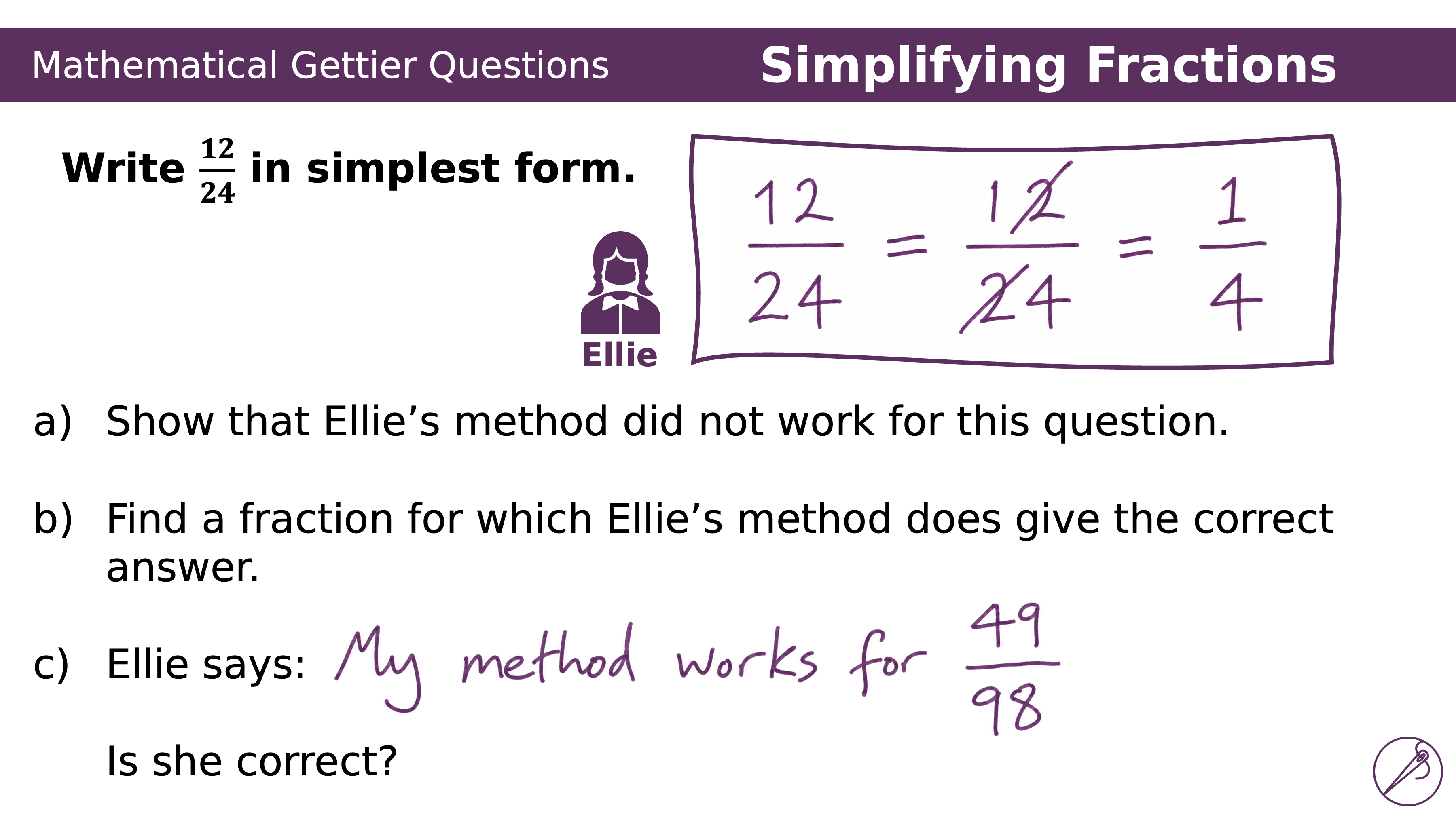
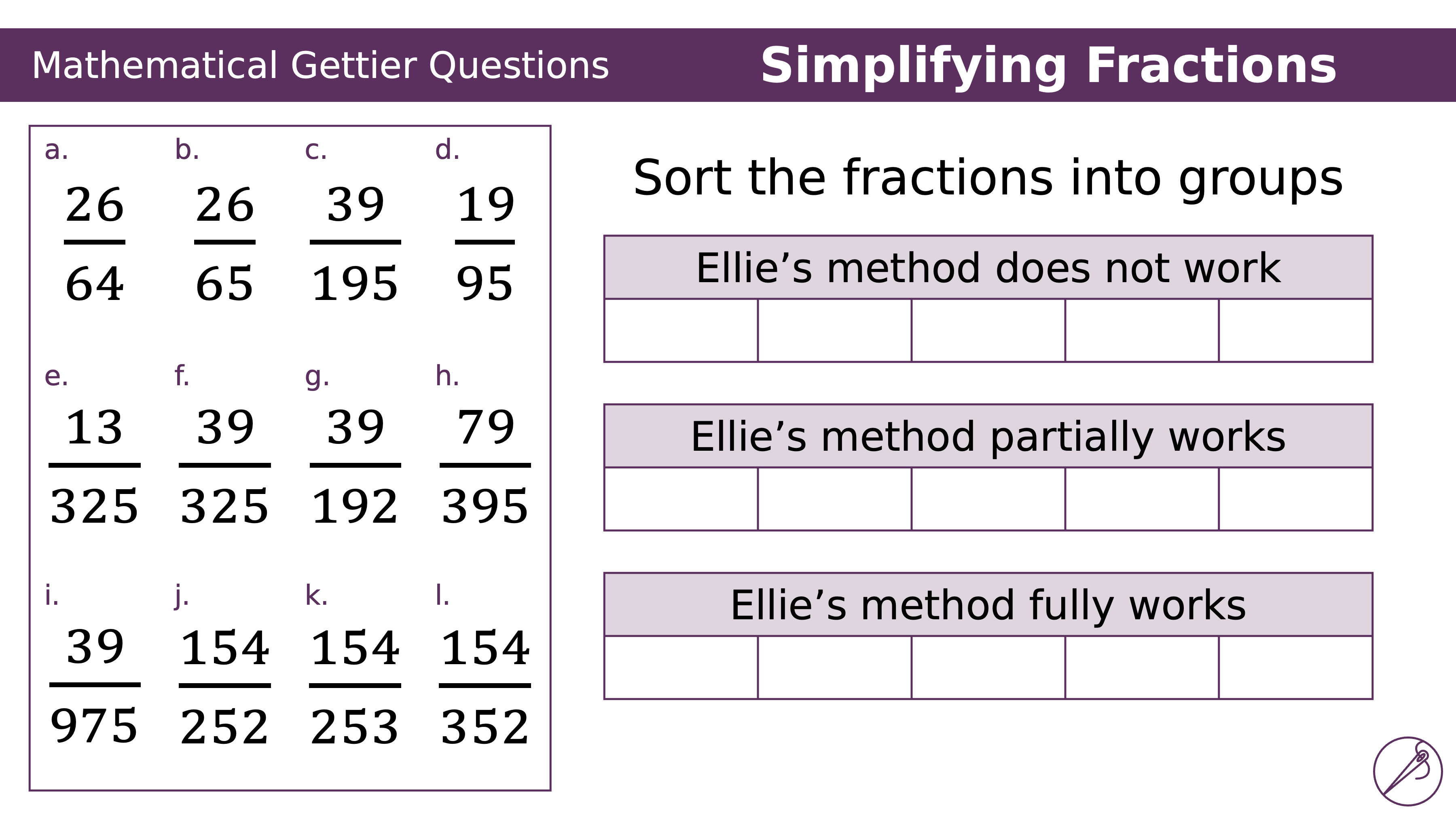
Simplifying Fractions
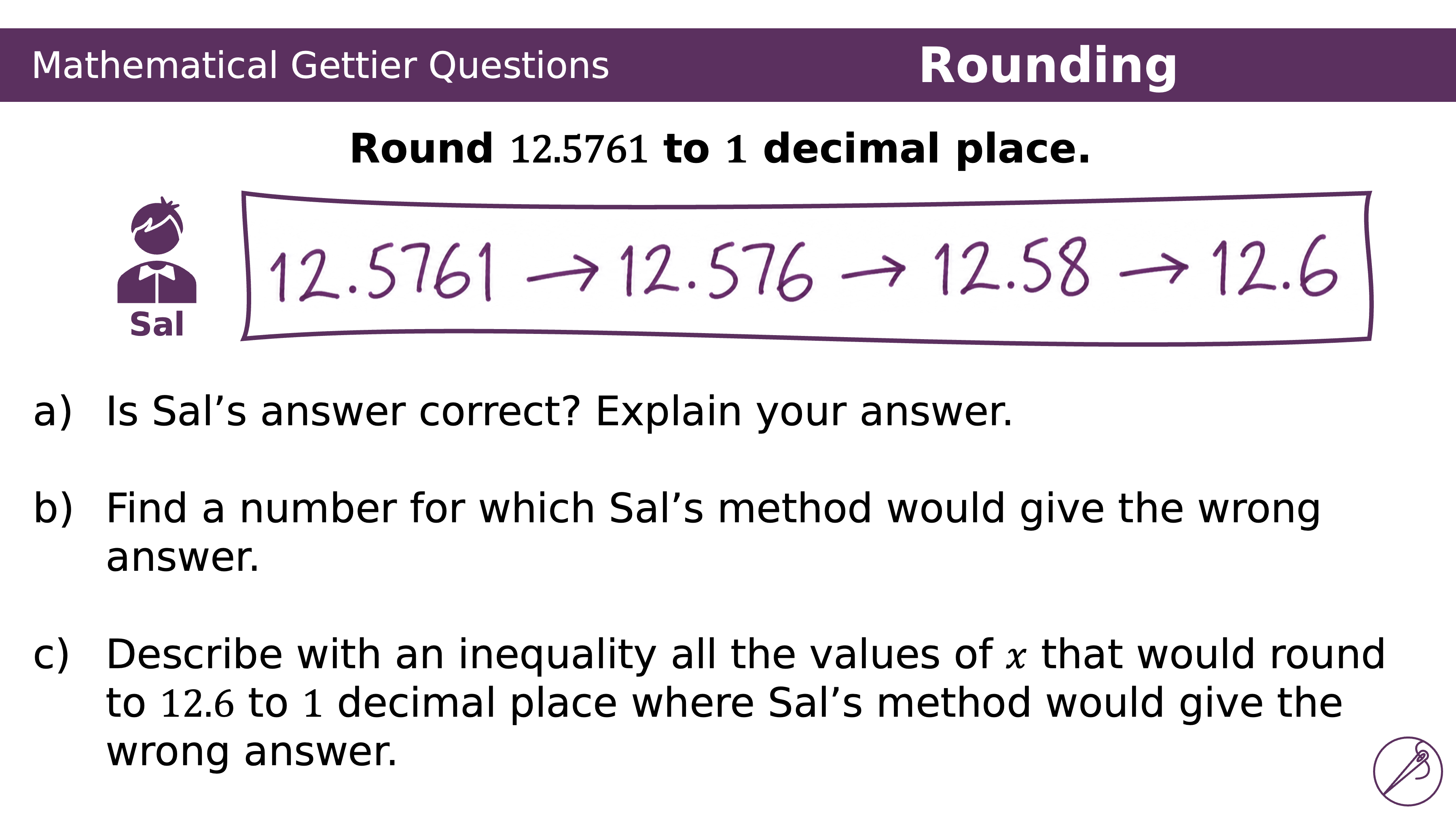
Rounding
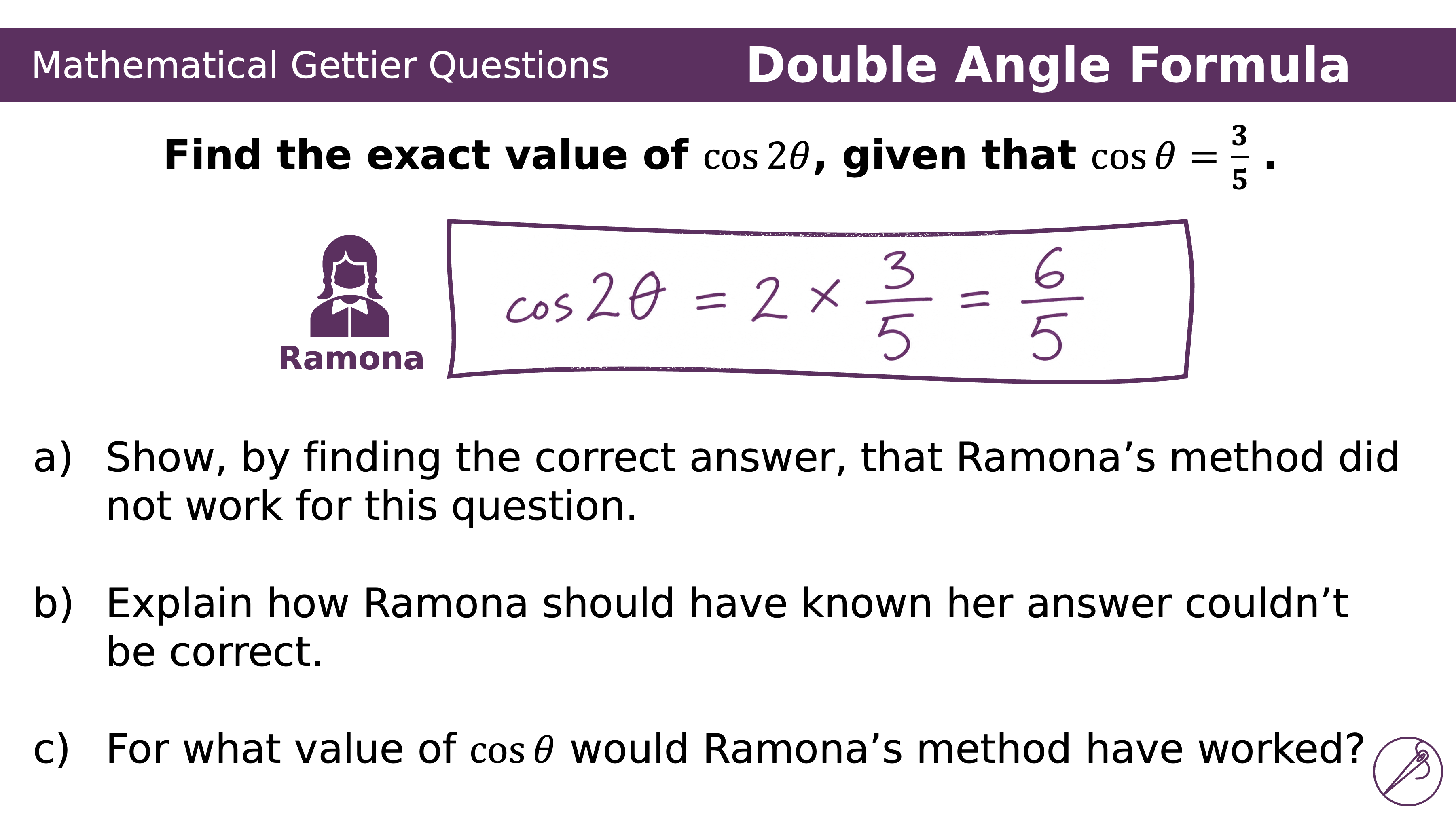
Double Angle Formulae
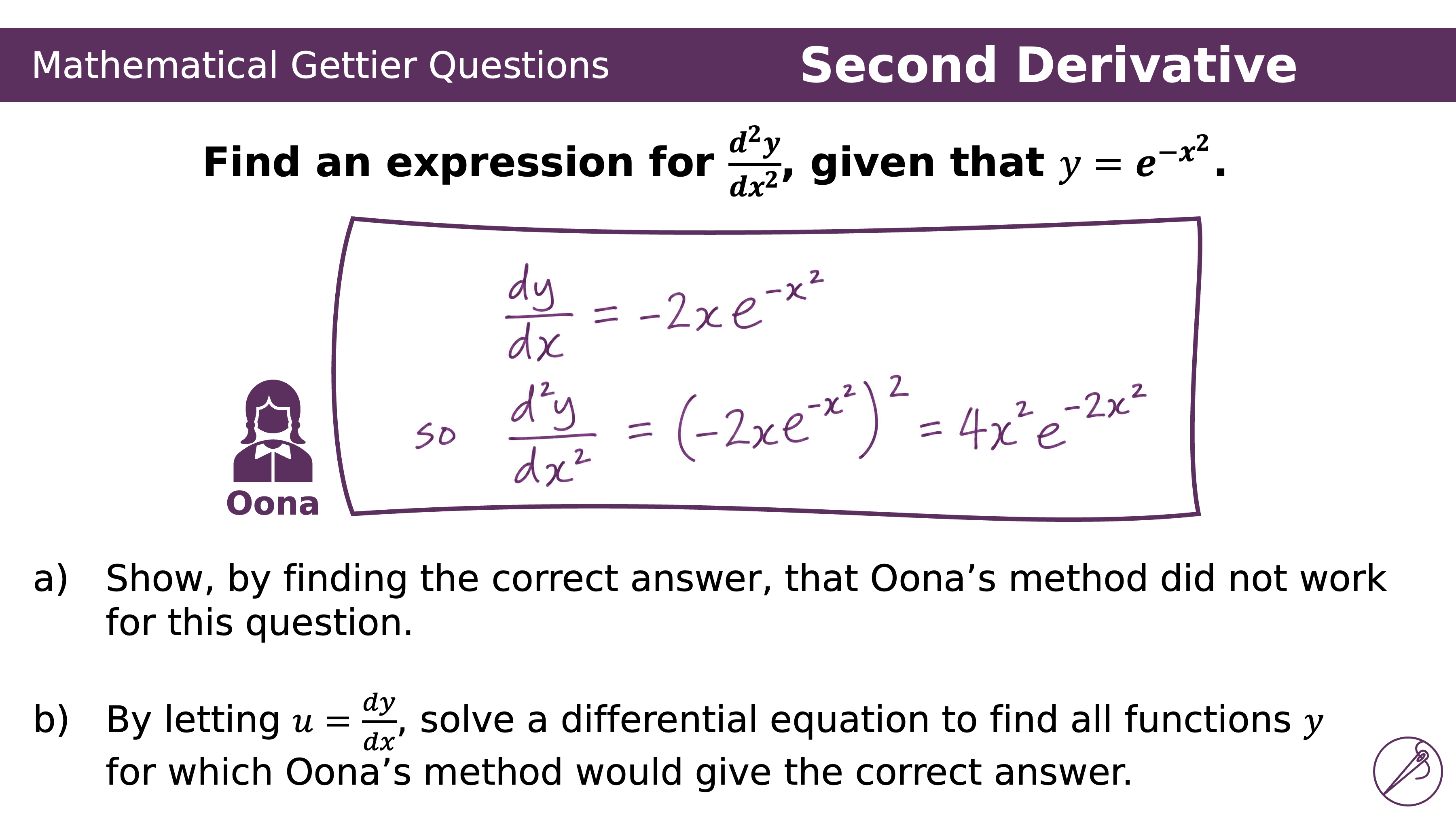
Second Derivative