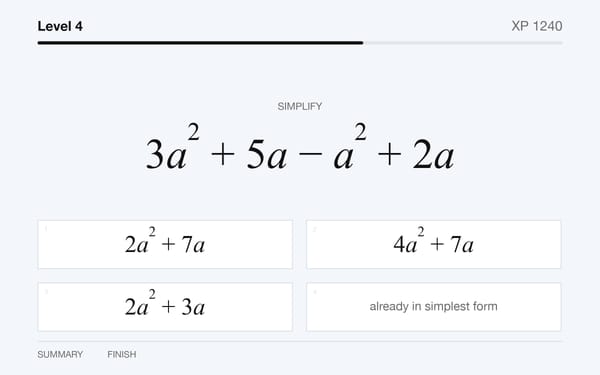
In #MathsToday, Year 10 did some Difference of Two Squares questions (the final page of interwovenmaths.com/quadratics).
Outside of #MathsToday, it was nice to see interwovenmaths.com/behaviour get a mention in Craig Barton's 3-Read Friday - eedi.substack.com/p/3-read-fri...
Today was my first Thursday Week A of the Half Term, which means there were no Maths lessons for me to talk about in #MathsToday.
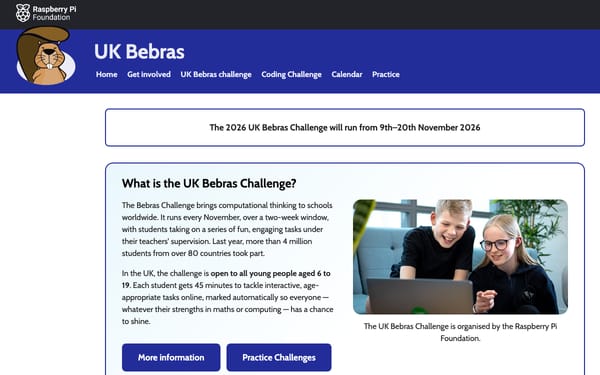
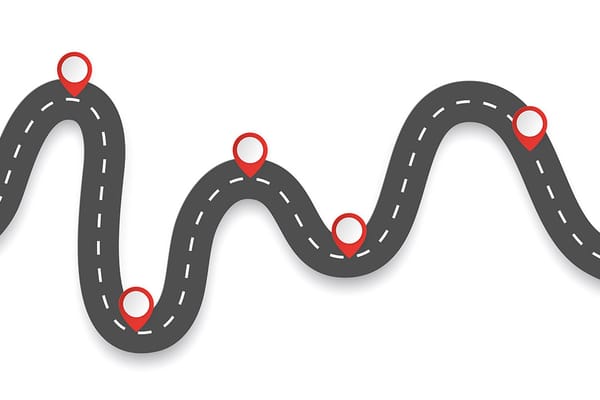
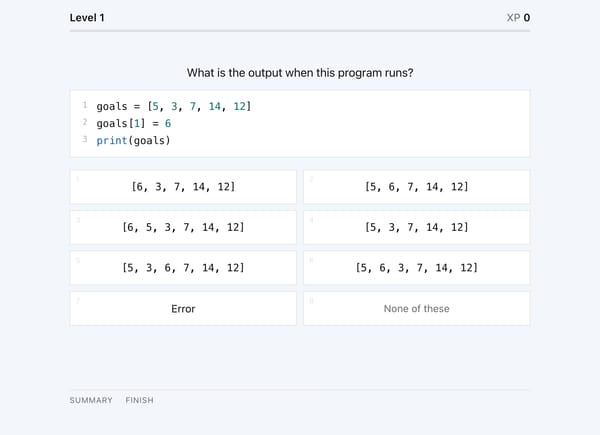
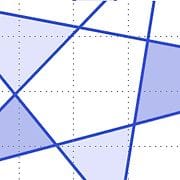
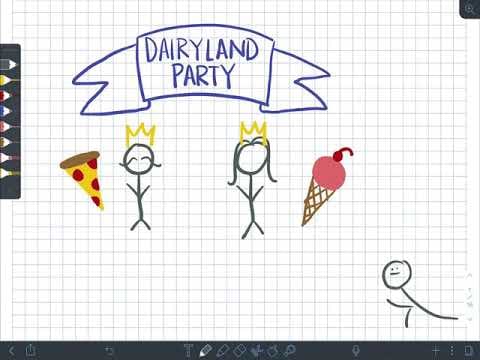
However, my Year 8 Computer Scientists did some practice for next week's Bebras challenge (www.bebras.uk) which has lovely mathematical problems, such as this one.
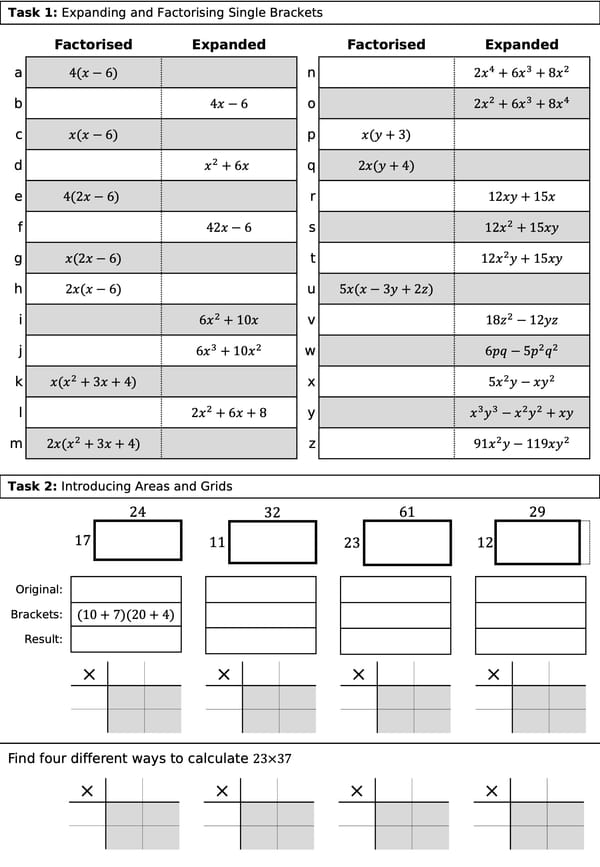
In #MathsToday, Year 10 did some expanding and factorising of quadratics.
Lots of grids were drawn.
(Tasks from interwovenmaths.com/quadratics)
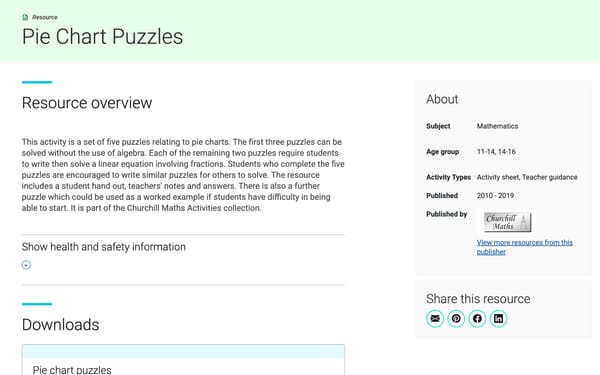
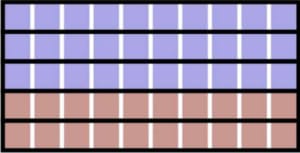
In #MathsToday, Year 10 did some Pie Charts, including some pie chart puzzles from: www.stem.org.uk/resources/li...
And Year 8 did some 'Best Buy'ing.
I also had a nice conversation about methods for factorising non-monic quadratics. #TeamGrid
Meanwhile, in #MathsTutoringToday I took expanding brackets as an opportunity to interweave in some other topics.
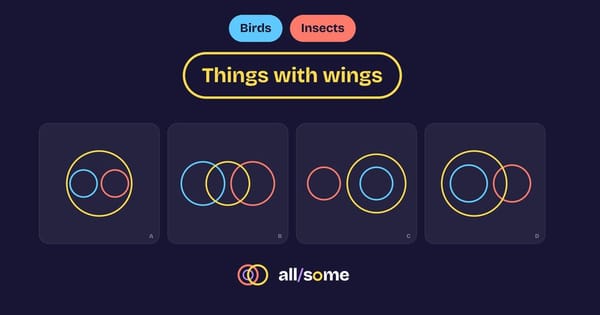
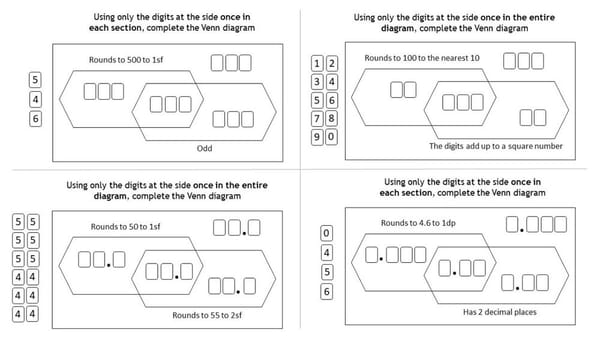
In #MathsToday, to kick off the new half term, Y8 did some recipe calculations, Y13 solved some coupled differential equations, Y10FM multiplied some matrices, and in form time, we thought hard about Venn diagrams while doing today's allsome.app, made by @critikid.bsky.social.
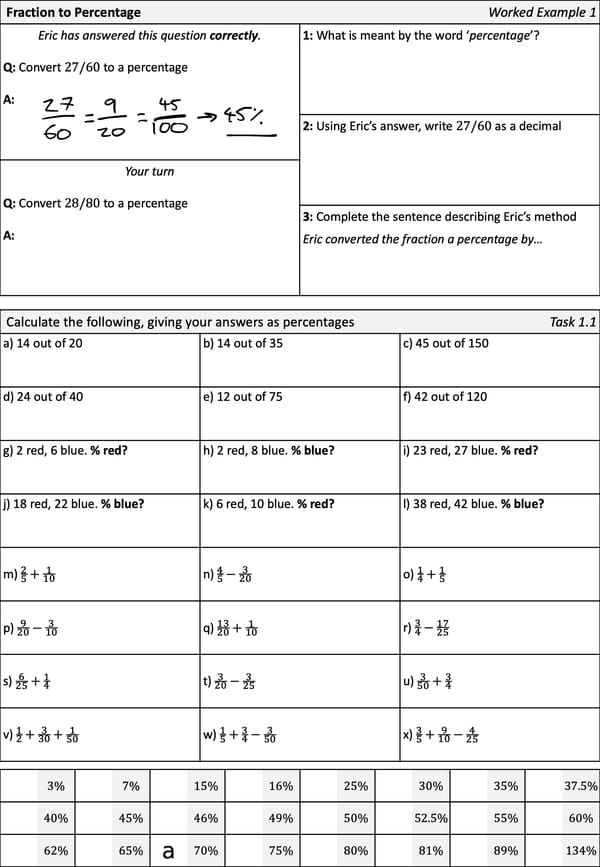
To wrap up Half Term 1, in #MathsToday, Year 10 were doing some fraction/decimal/percentage conversions inspired by/adapted from Don Steward.
interwovenmaths.com/percentages
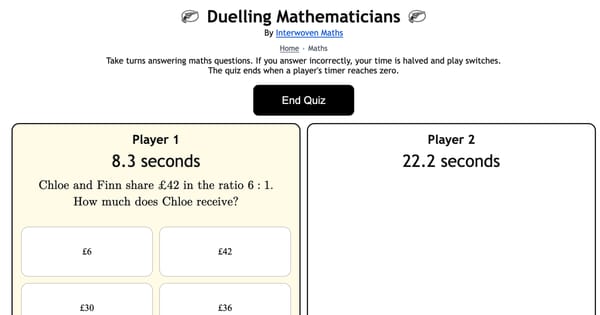
We also finished the lesson with some nicely competitive Class Duels:
classduels.com/maths/
In #MathsToday, Year 13 did some exam practice of Differential Equations.
This was a nice opportunity to link in some of their other Pure/Core Pure topics.
I hope, at some point, to talk in depth about the current state of AI in aiding maths teaching/learning.
But searching through past papers from other specifications to find suitable exam questions used to take me many hours, and AI has made that considerably quicker and more efficient.
In #MathsToday, Y13 kept on keeping on with Differential Equations and, while helping a Y12 with some trig at the lunchtime Maths Clinic, I had some fun exploring the joys of the unit citcle.
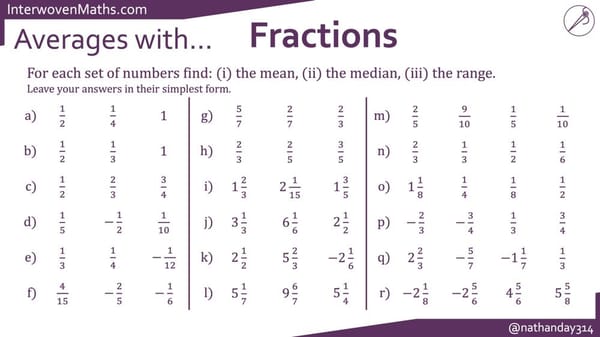
In #MathsToday, Year 10 did some averages with fractions:
interwovenmaths.com/averages-wit...
This was one of the original Interwoven Maths tasks when the site launched, and I still love the different fraction skills it requires, e.g. finding the midpoint of two fractions in the third column.
I also got to use the word ansatz a lot with Year 13 solving some differential equations, which always makes me smile.
It's also a word the was the basis for one of the more niche crossword clues I've written:
"Substitute hesitation in for a number in a trial solution." (6)
Year 13 also had to put up with me saluting whenever we found a general solution.
In #MathsToday, Year 13 did some Modelling with Vectors exam questions involving tunnels, pipelines, telephone cables, laser pens, submarines, aerodromes, tennis courts, pieces of cloth, lean-to greenhouses, tents, construction sites, ventilation shafts, coal seams, and glass ornaments. What fun!
Meanwhile, outside of #MathsToday, I've been finding life to be a little on the stressful side lately.
So my morning commute, once again, called for listening to Keith Jarrett's Köln Concert:
www.youtube.com/watch?v=Pd_K...
Nothing makes me feel better quite like it.
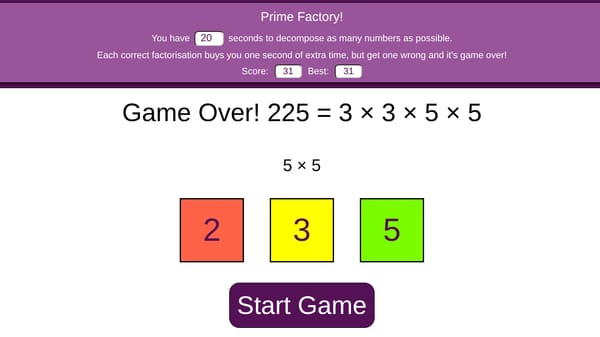
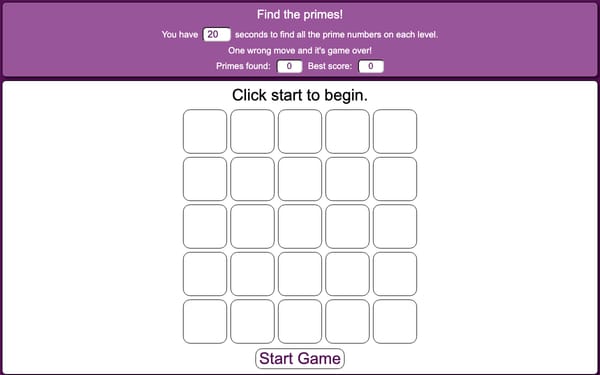
In #MathsToday, a Friday afternoon lesson with Year 8 called for some Prime Factory (mathsbot.com/puzzles/prim...) and Find the Primes (mathsbot.com/puzzles/find...) to support our recent work on simplifying/equivalent ratios.
Sadly, I didn't beat either of my high scores.
Today was another day of teaching Computer Science, so not much was done in #MathsToday.
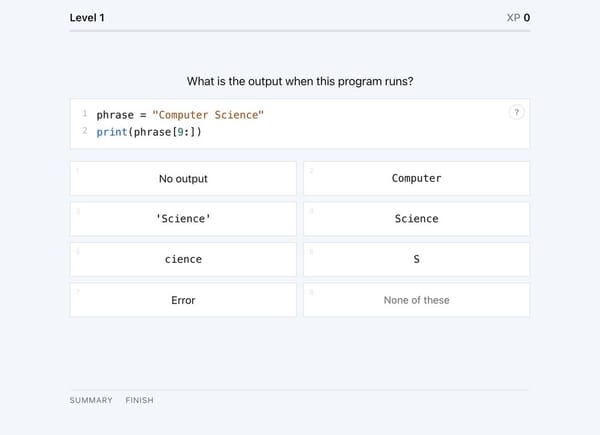
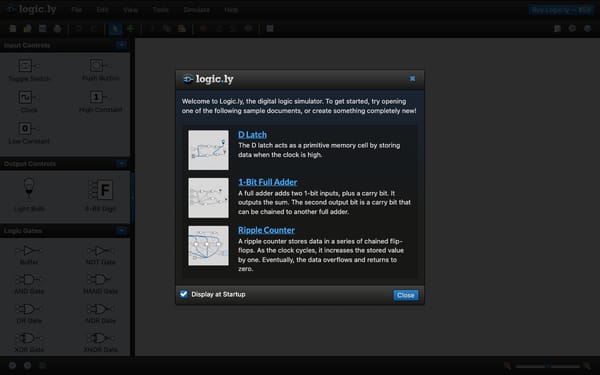
In Year 9 we've been practising our skills with strings (interwovenmaths.com/strings), Year 8 were looking at logic gates and building some circuits with (logic.ly/demo/), and Year 7 were doing more Flowol!
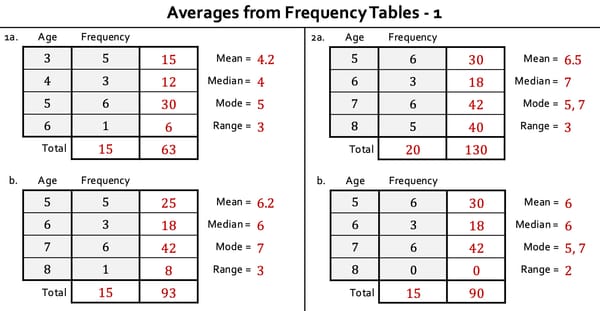
In #MathsToday, Year 10 were doing some averages from frequency tables.
They started with this from one of @studymaths.bsky.social's #1001MathsBots [table not revealed at first!].
And then moved on to some variationy practice questions.
interwovenmaths.com/frequency-ta...
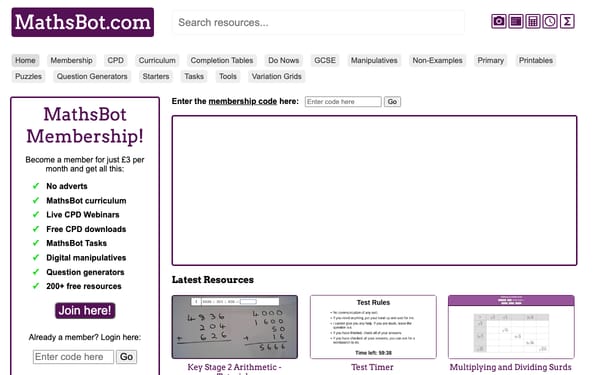
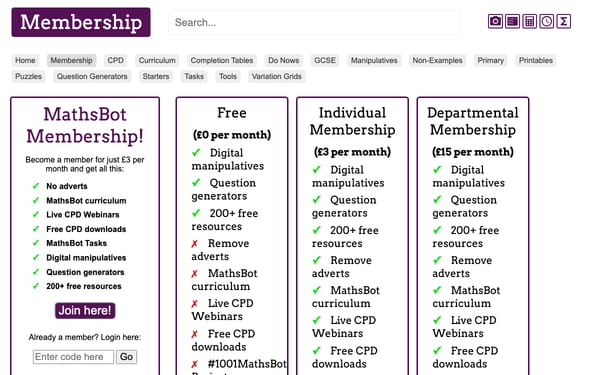
More details about MathsBot membership, which gives access to many hundreds of amazing tasks, the MathsBot curriculum, and ad-free mode, can be found here:
mathsbot.com/membership
Very much worth it!
In #MathsToday, Year 8 have started a chapter on Ratio and Proportion.
Certainly a contender for one of my favourite topics to teach. And it is one with a lot of particularly lovely NCETM Checkpoints to choose from - these are two highlights for me.
www.ncetm.org.uk/classroom-re...
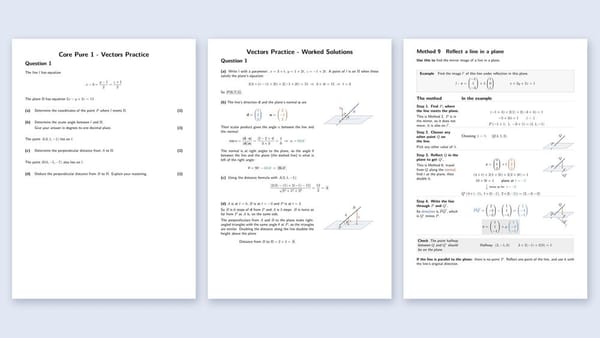
In #MathsToday, following a not-so-great performance on the vectors question in last week's CP1 assessment, Year 13 FM did some Vectors practice questions.
These focused on key vectors skills.
Tackling tricky vector modelling questions is a job for later in the week.
interwovenmaths.com/vectors
I'll let the students be the judge of whether my handwritten answers are as clear as the typed ones...
Realistically, a handwriting course would probably be the best CPD I could do to improve my teaching!
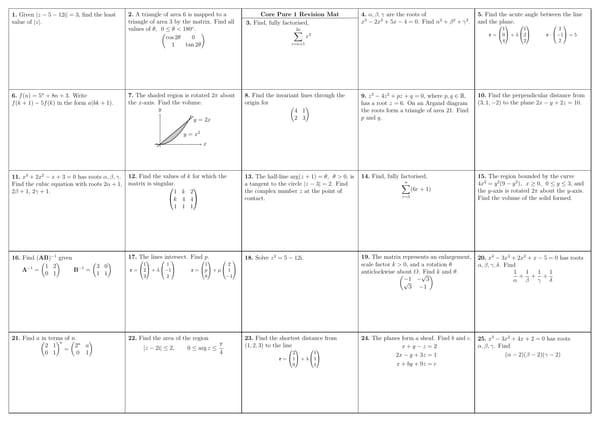
In #MathsToday, Year 13 Further Maths had a lesson in the morning to revise for an afternoon Core Pure 1 assessment.
I printed off a nice double-sided A3 revision mat.
There's something about that format that I find feels more approachable than 50 questions in a list!
interwovenmaths.com/mats/cp1
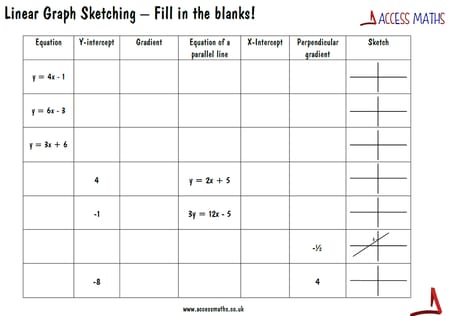
The first resource to get me hooked on the Revision Mat was Access Maths's brilliant '100 Questions!' GCSE Crossover page, which I've used with many a Year 10/11 class.
Can be found here, near the bottom, below a load of other grade revision resources:
www.accessmaths.co.uk/revision-res...
It's tricky to do a proper #MathsToday today as I've spent all in Bristol for a meeting.
However, I've managed to spend a bit of time on the train back planning some Year 8 Ratio lessons, which reminded me of this rather unusual Combining Ratios Completion Table.
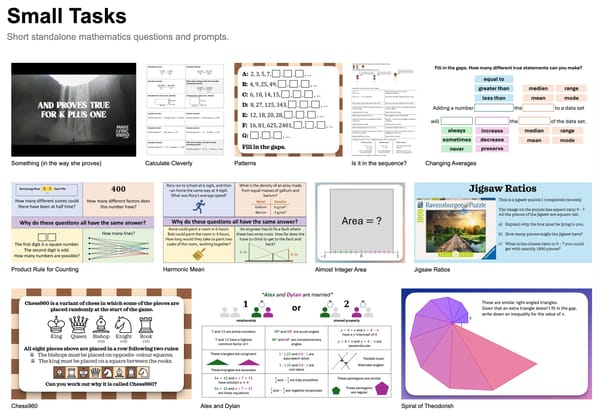
interwovenmaths.com/small-tasks
or is it even a structured variation grid...? @studymaths.bsky.social
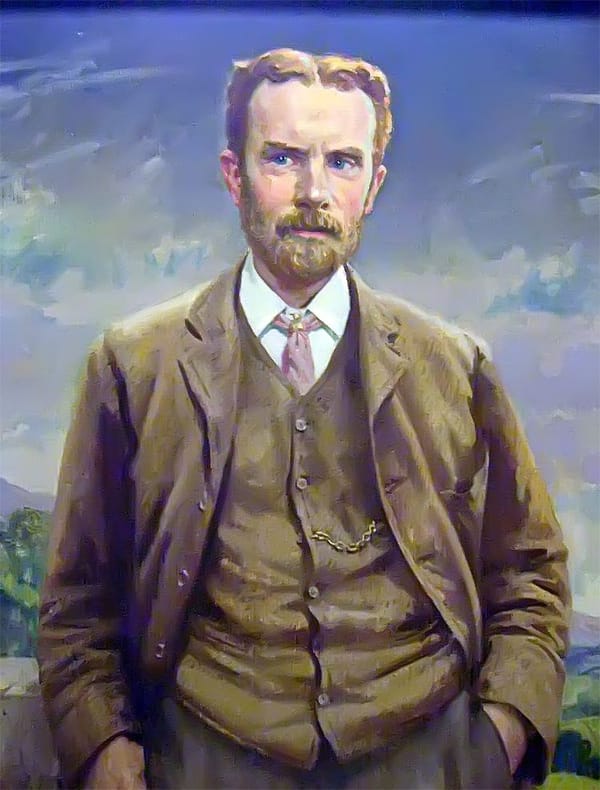
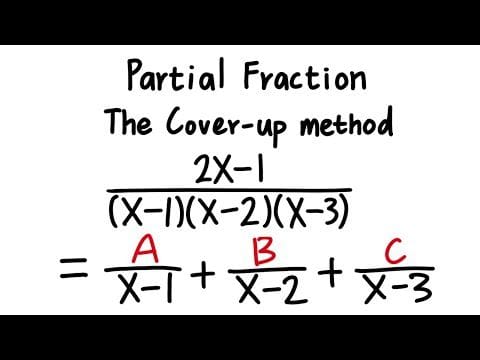
In #MathsToday, I introduced some students (and colleagues) to Oliver Heaviside and his 'cover-up method' for partial fractions.
While not ideal for exams, as it isn't much of a written method, I find it a handy check and I'm surprised so many haven't heard of it!
en.wikipedia.org/wiki/Heavisi...
A nice explanation of the method and why it works (essentially a shortcut of the shortcut that is the substitution method) from the excellent blackpenredpen can be found here:
www.youtube.com/watch?v=fgPv...
In #MathsToday, Year 10 did some exam question practice based on recent work on Similar Shapes.
This term, I have been very much enjoying the benefits of having spent part of my summer holiday building a 8000+ question database of all GCSE Maths past paper questions.
In this case, I narrowed down the topic to similar triangles, sorted by performance, and found a couple of suitably interesting questions.
In #MathsToday, Year 10 were looking at the Product Rule for Counting.
We looked at how subtly different scenarios lead to different calculations, each with different geometric/algebraic generalisations.
I spent quite a while coming up with a context where all four variations felt meaningful.
We also, naturally, also looked at the opposite - scenarios which look very different on the surface, but have the same underlying mathematical structure.
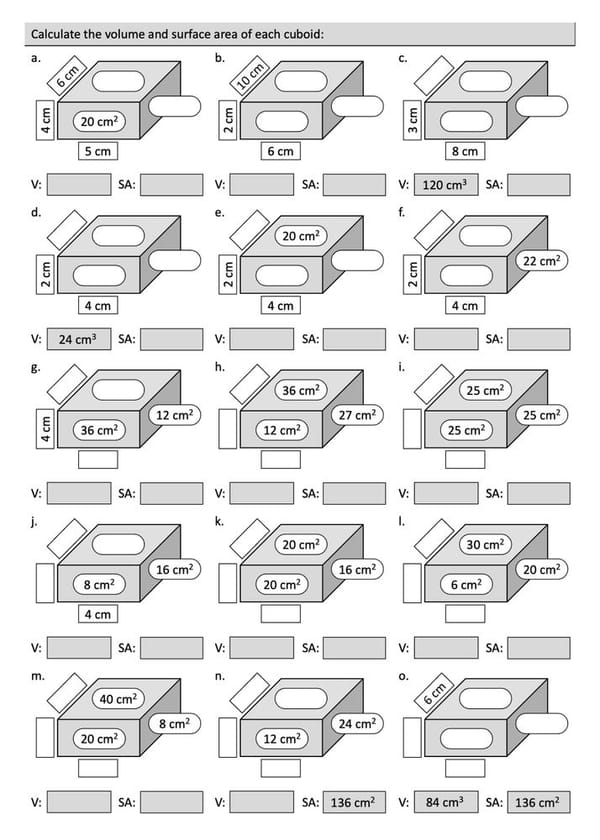
In #MathsToday, Year 13 did some Integrating Factor, Year 10 worked on similar shapes, and Year 8 found some surface areas and volumes of cuboids.
interwovenmaths.com/faces-of-cub...
In #MathsToday, I had no Maths lessons.
But in Computer Science, Year 7 have been continuing to build flowcharts with Flowol, Year 8 have been comparing cloud and local storage options, and Year 9 have been consolidating their Python lists skills with:
interwovenmaths.com/lists
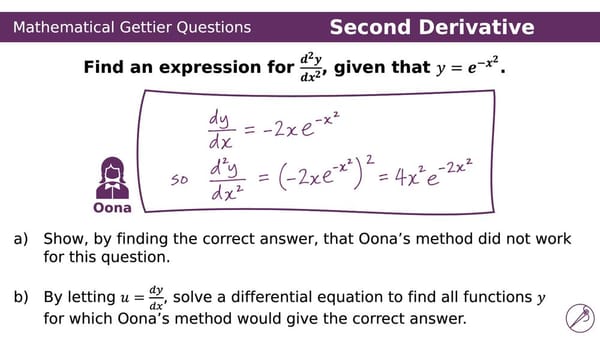
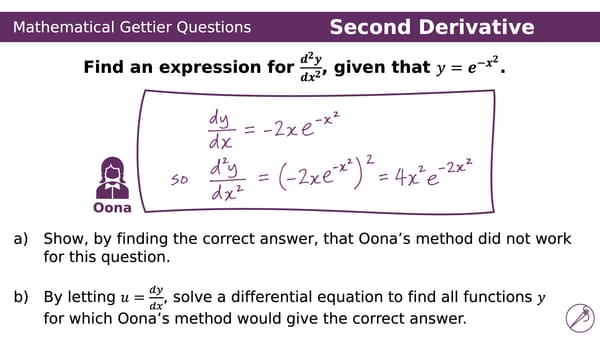
In #MathsToday, Year 13 did a new Mathematical Gettier Question linking to Differential Equations (and then we started looking at Integrating Factors).
In #MathsToday, I did some Mathematical Gettier Questions with Y8 and Y13.
Mathematical Gettier Questions are tasks that explore how incorrect methods sometimes give correct answers.
Explained in more detail here:
interwovenmaths.com/mathematical...
What ideas can you think of for similar tasks?
Nathan Day (@nathanday.bsky.social)
Linked here!
interwovenmaths.com/mathematical...
In #MathsToday, Year 8 were doing Plans and Elevations.
Inspired by this NCETM Checkpoint, we may have gone on a slight tangent into the history of the Egyptian pyramids.
www.ncetm.org.uk/classroom-re...
In #MathsToday, Year 10 Level 2 Further Maths wrapped up Binomial Expansion with some lovely questions from @draustinmaths.com, who has an excellent selection of L2FM worksheets at:
www.draustinmaths.com/level2fm
In #MathsToday, Year 10 had their first 'Homework Quiz' of the year.
Inspired by @karenshancock.bsky.social, they had a week to complete a set of questions.
They could work together if desired, get help from others, or even use the solutions that were provided towards the end of the week.
But...
...they had to be able to complete a sample of the questions (including with slight changes to numbers) in a mini-quiz in the lesson, with an expectation of getting 100%.
This keeps the focus on learning from the homework, not just doing the homework (to paraphrase @adamboxereducation.bsky.social).
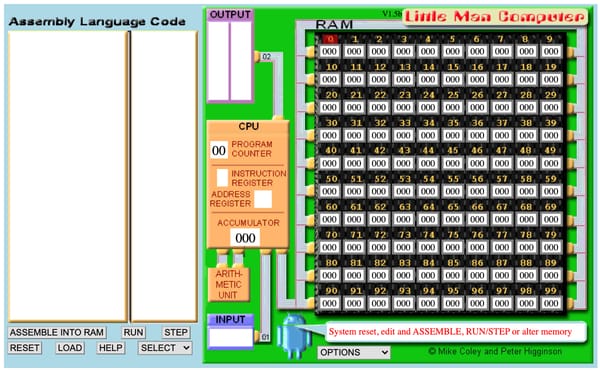
Not much Maths to report on in #MathsToday, but in Computer Science Year 8 had fun making programs with the Little Man Computer:
www.peterhigginson.co.uk/lmc/
#ComputerScienceToday
In #MathsToday, Year 13 Further Maths were continuing with Complex Numbers. I used some of the @desmos.com graphs I made a couple of years ago.
In #MathsToday we were looking at roots of unity.
I made use of the amazing new Desmos @desmos.bsky.social Complex Numbers features to make a visualisation of the sum of the roots of unity being 0:
www.desmos.com/calculator/d...
Nathan Day (@nathanday.bsky.social)
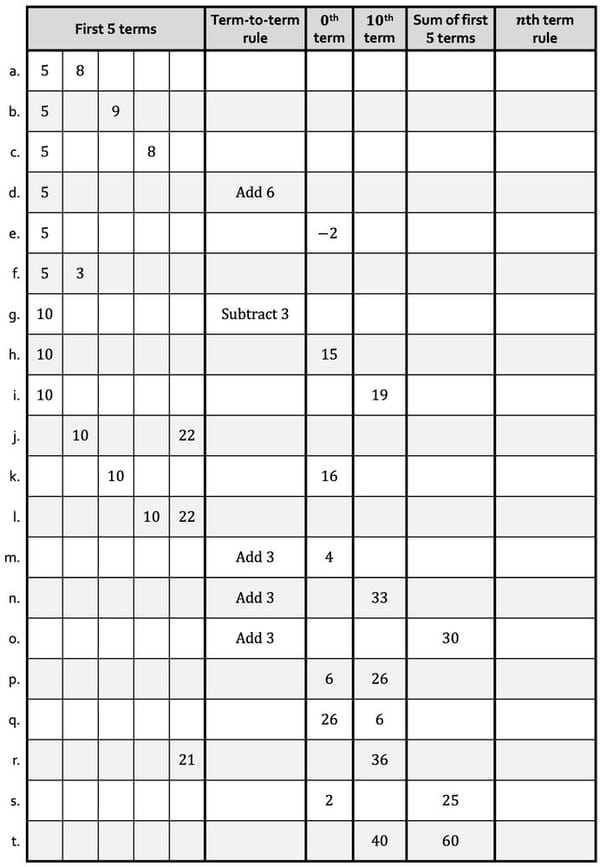
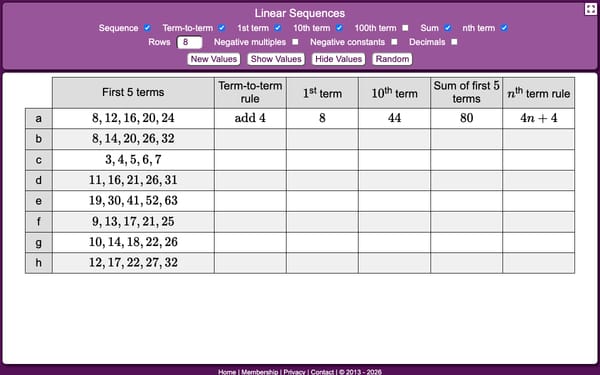
In #MathsToday, Year 8 did my Sequences Completion table.
interwovenmaths.com/sequences-co...
Inspired, of course, by @studymaths.bsky.social's dynamic version available at:
mathsbot.com/tables/nthTerm
In #MathsToday, I did some Mathematical Gettier Questions with Y8 and Y13.
Mathematical Gettier Questions are tasks that explore how incorrect methods sometimes give correct answers.
Explained in more detail here:
interwovenmaths.com/mathematical...
What ideas can you think of for similar tasks?
In #MathsToday, Year 10 had a brief diversion to learn about the mathematics of Gerrymandering - the focus of this topic's mathematician, Moon Duchin.
We watched a nice video:
www.youtube.com/watch?v=tqCa...
and discussed some questions from:
mathematics-democracy-institute.org/gerrymanderi...
I had no Maths lessons in #MathsToday.
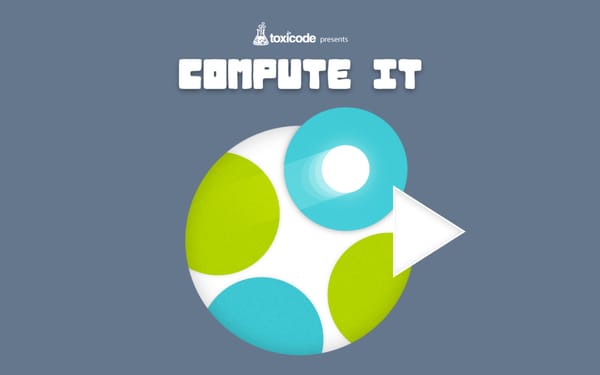
But in #ComputerScienceToday a Year 8 class spent some time on my favourite Computer Science resource:
compute-it.toxicode.fr?progression=...
which has such incredible attention to detail for its level progression and visual design.
In #MathsToday, Year 10 did some some variation-inspired expanding and factorising of single brackets (Task 1 in interwovenmaths.com/quadratics) before moving on to some algebraic fractions, ending with a classic 'A Day in the Life' resolution question.
In #MathsToday, Year 10 did some some Interwoven Related Calculations and then started on my all-new Algebra Fluency page - answering 1000+ questions between them!
interwovenmaths.com/algebra
It also gave me lots of data to know where to focus lessons in the Algebra topic we're about to start.
Meanwhile, Year 8 in #MathsToday were continuing with their progress through their Maths Pad @mathspadnicola.bsky.social sequences booklet (which are always astonishingly good), and getting used to the format of their starters, which are currently focussing on some key number work.
In #MathsToday, I had my first after-school lesson with Year 10 Level 2 Further Maths.
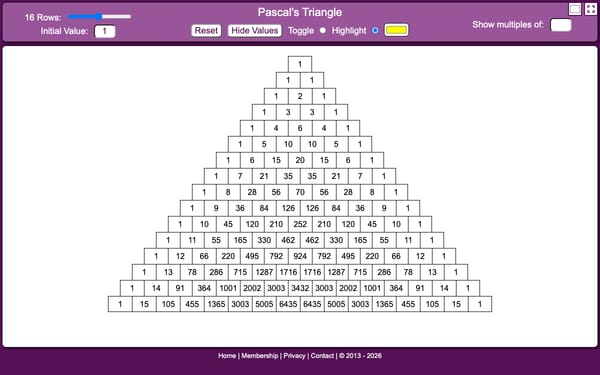
We looked at some different problems that just happened have some Pascal's triangle under the surface. Then explored how you can interpret each problem either recursively or combinatorially.
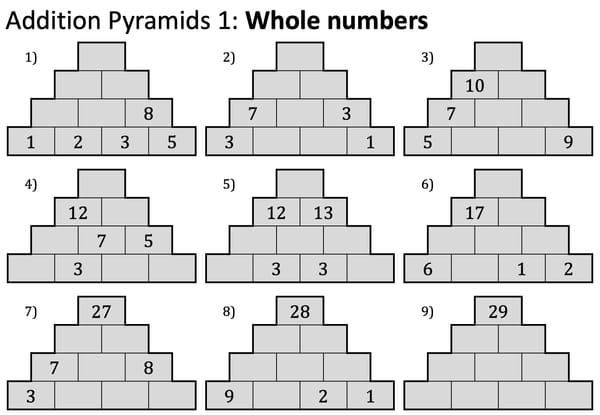
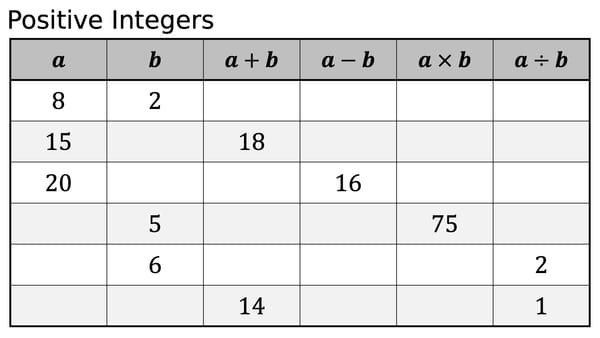
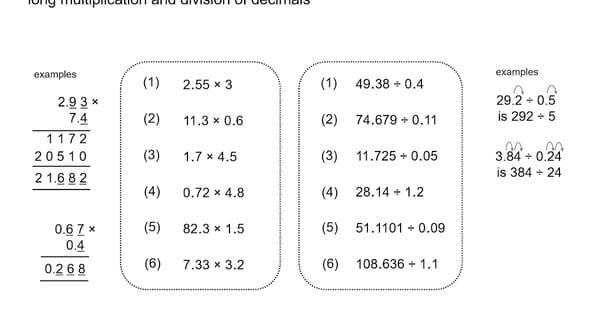
Meanwhile, with my other Year 10 class, in #MathsToday we did these lovely decimal tasks:
- www.openmiddle.com/sums-with-th...
- interwovenmaths.com/addition-pyr...
- interwovenmaths.com/four-ops-tab...
- donsteward.blogspot.com/2011/11/easy...
And Year 13 did some complex numbers questions from @tlmaths.bsky.social and @danihosford.bsky.social's excellent Core Pure Part 2 book:
sites.google.com/view/tlmaths...
It has really lovely questions, and nicely brings in ideas from other topics in clearly labelled questions.
I highly recommend.
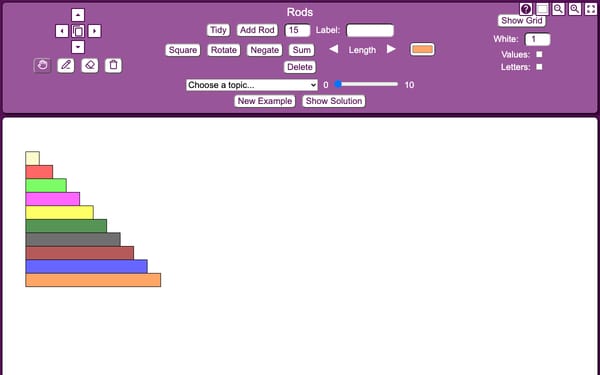
With thanks to @studymaths.bsky.social, of course, for both the Cuisenaire rods page (mathsbot.com/manipulative...) and the Pascal's Triangle generator (mathsbot.com/activities/p...).
Yes, we also found time to look at the nice Sierpiński patterns!
I'm going to try to do #MathsToday as consistently as possible this year (although I might struggle on days when I only teach Computer Science!).
Today, in my first lesson with Y10, we did some of @dandraper.bsky.social's lovely significant figures tasks:
mrdrapermaths.wordpress.com/2020/11/14/z...
I also got to introduce de Moivre's theorem to my Year 13 Further Mathematicians, continue some arithmetic sequences with Year 8, and discuss different 'Poor Proxies' with Year 13 in Tutor Time.
Resources Linked
From Interwoven Maths
From Elsewhere
 Interwoven MathsExpanding and Factorising QuadraticsA quadratics booklet covering expanding, factorising, completing the square, roots, graphs and area-model reasoning.
 Interwoven MathsWhy is nobody talking about behaviour?Behaviour is a factor across maths education's biggest issues: how we teach, who stays in teaching and who gets left behind. So why is nobody talking about it?
 Craig Barton (Eedi)3-Read Friday #130Behaviour, scripted instruction, and keeping standards in the foreground